
Laodikeia
A valley city at the Lykos crossroads, reaching from the 6th millennium BCE to the 7th century CE and the Turkish period.
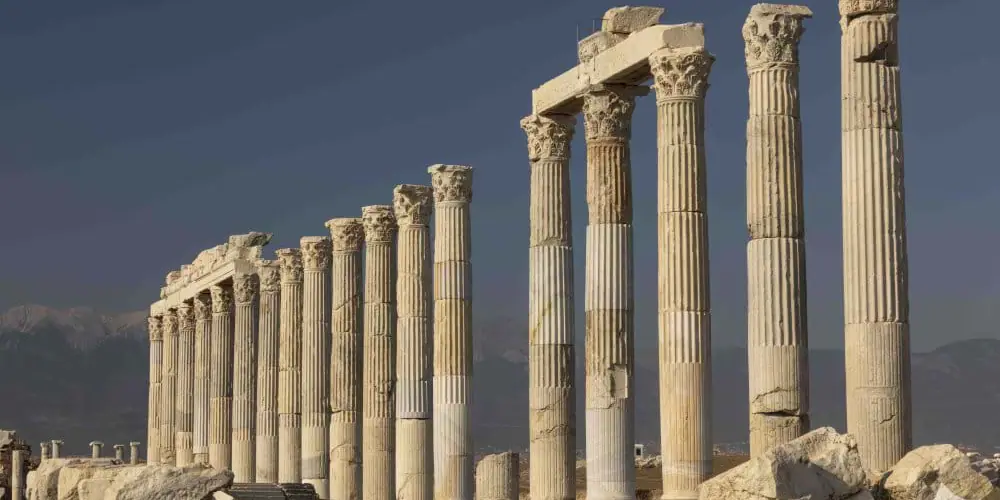 Photograph unavailable
Denizli · Valley city
Crossroads of three ancient regions
Rising on a plateau in the fertile Lycus Valley, Laodicea flourished at the shared historical boundary of Phrygia, Lydia and Caria as antiquity's premier banking and textile trading metropolis.
Two theatres, stadium and colonnaded streets
One of the rare cities in Anatolia featuring two theatres, Laodicea boasted a massive stadium, monumental nymphaea, bustling agoras and wealth built on raven-black raven wool textiles.
One of the Seven Churches of Asia
Holding a central place in early Christianity as one of the Seven Churches of Revelation, the restored 4th-century Laodicea Church showcases breathtaking mosaic floors and a monumental marble baptistery.
In the heart of the Lycus Valley
With hundreds of re-erected columns lining Syria Street, Laodicea forms a magnificent archaeological circuit alongside Hierapolis-Pamukkale, Tripolis and Colossae.
Metropolis of silk, marble and faith
Sprawled across a scenic plateau overlooking Denizli, Laodicea commands attention with two ancient theatres, monumental colonnaded avenues and a 4th-century church with exquisite mosaic pavements. Gazing toward Hierapolis-Pamukkale and Tripolis, it brings the vibrant prosperity of the ancient Lycus Valley back to life.
Layers of the place
How is the place situated?
The Culture Portal places Laodicea in the Lycus or Çürüksu Valley, at the shared historical boundary of Phrygia, Lydia and Caria. This setting calls for the city to be read as a threshold between valleys and historical geographies rather than through one regional label.
How do the layers change?
The official record spans settlement traces from the sixth millennium BCE to the early 7th century CE and distinguishes Hellenistic naming, the monumental Roman city and Eastern Roman layers at the same place. This long range does not mean that all visible structures were contemporary.
How was the place inhabited?
The long sequence shows the same area being reused by different communities in the Lycus Valley. Because this source does not provide a detailed population, production, trade or religious catalogue, the community layer should not be expanded with unsupported economic or demographic claims.
What can be said today?
Laodicea's significance rests not only on its visible Roman colonnades but also on the longer settlement sequence preserved beneath and around them. Current excavation areas, visiting conditions, tickets and access must be checked through separate dated official sources.
Connected stops
Stories that include this stop
Sources
Frequently asked questions
Where is Laodikeia?
Laodikeia is presented in this guide as a valley city in Denizli.
How can I find sources for Laodikeia?
The Sources section links to the evidence supporting this dossier.