
Hierapolis-Pamukkale
Travertine, thermal water, necropolis and ancient city: one landscape of natural process and human settlement.
 Photograph unavailable
Denizli · Nature and history
A white dream sculpted by thermal waters
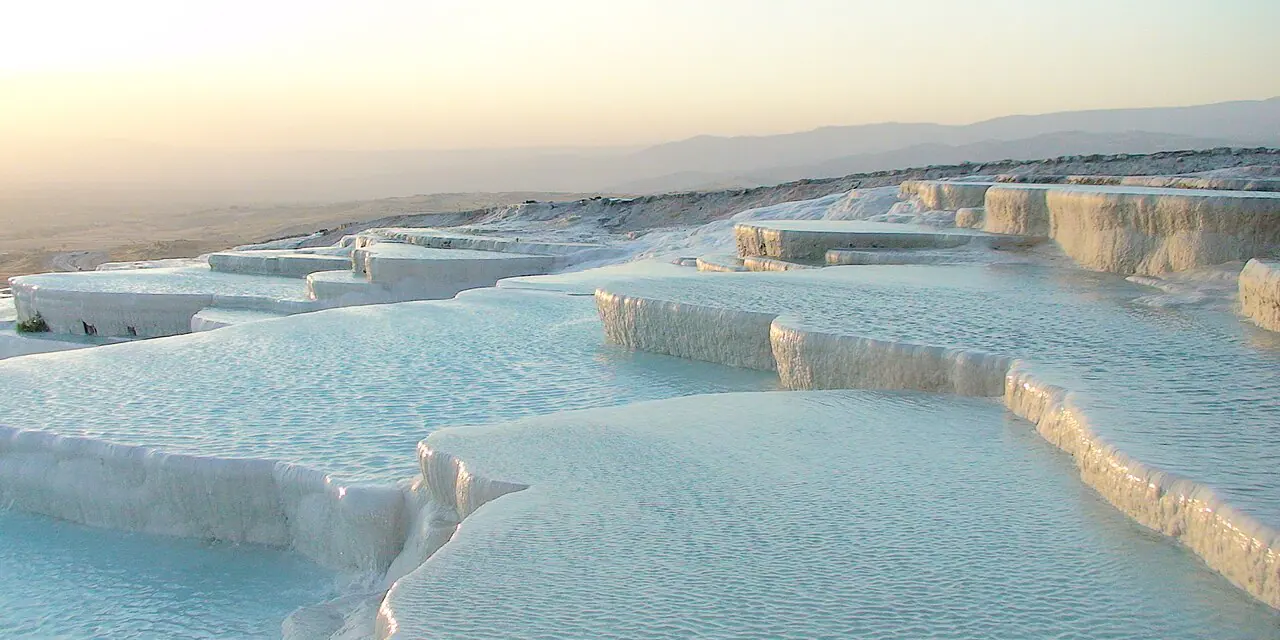
Cascading down a 200-metre cliff, mineral-rich thermal waters have sculpted dazzling white travertine terraces, petrified cascades and warm thermal pools where visitors swim among submerged Roman columns.
Rhythm of an ancient spa capital
Founded as a thermal health spa by the Kings of Pergamon, Hierapolis flourished as the premier healing sanctuary of Roman Asia, crowned by a magnificently restored imperial theatre and thermal baths.
From the Plutonium to St Philip's Martyrium
While the mysterious Plutonium was feared as the gateway to the underworld emitting vapors, the octagonal Martyrium of Apostle St Philip established the city as a revered Christian pilgrimage destination.
White pearl of the Lycus Valley
With its monumental necropolis, travertines and archaeological museum, Hierapolis joins nearby Laodicea, Tripolis and Colossae in an unmatched cultural journey.
White travertines and ancient healing
Perched atop the snow-white travertine cascades of Pamukkale, Hierapolis astonishes travellers with its imperial theatre, the legendary antique Cleopatra Pool with submerged Roman marble columns, and a vast necropolis. Linking with Laodicea, Tripolis and Aphrodisias, it forms an unforgettable journey through the Inner Aegean.
Connected stops
Stories that include this stop
Sources
Frequently asked questions
Where is Hierapolis-Pamukkale?
Hierapolis-Pamukkale is presented in this guide as a nature and history in Denizli.
How can I find sources for Hierapolis-Pamukkale?
The Sources section links to the evidence supporting this dossier.