
 Photograph unavailable
From Lycus to the Büyük Menderes: Laodicea, Hierapolis and Tripolis
Story in brief
Place, time and memory on one line.
A sourced comparative reading of urban layers in the Lycus Valley, Pamukkale's natural-cultural landscape and a crossroads on the Büyük Menderes.
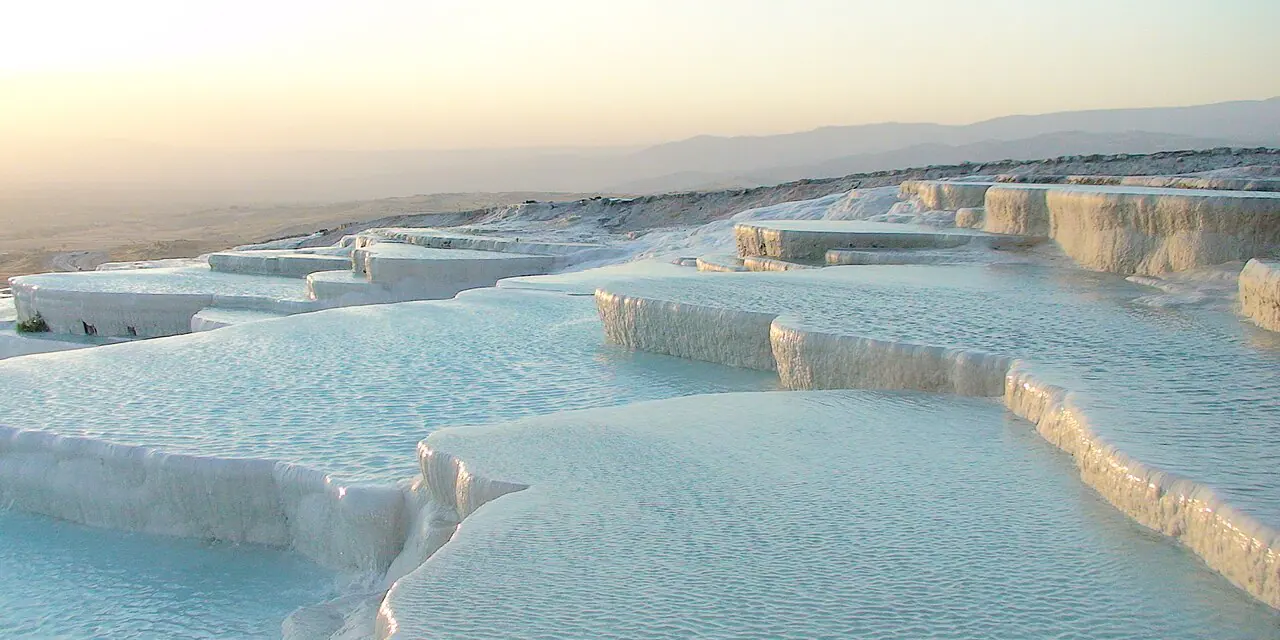
Where the Lycus (Çürüksu) Valley converges with the Büyük Menderes, nature's geothermal wonders merge with marble Roman metropolises. Gleaming white beneath the Aegean sun, Hierapolis-Pamukkale combines cascading mineral terraces with a stunning hillside theater, the mystical Plutonium cave and the Mediterranean's largest ancient necropolis.
Across the valley floor, Laodicea showcases immense wealth derived from fine purple wool, featuring the colonnaded Syria Street and one of the Seven Churches of Revelation. Northwest at the river crossing, Tripolis guards the trade junction with monumental stone arches and market squares. This golden triangle is one of Anatolia's most breathtaking encounters between geology and urban splendor.
Stops in this story
Sources
Frequently asked questions
How are the stops in this story connected?
From Lycus to the Büyük Menderes: Laodicea, Hierapolis and Tripolis reads Laodikeia, Hierapolis-Pamukkale, Tripolis together not as one mandatory itinerary, but through a shared region, period, landscape or sourced historical relationship.
Where can I see this story's sources?
The Sources section visibly lists the institutional and research links supporting this narrative. Current visitor information is added only when confirmed by a dated authoritative source.