
 Photograph unavailable
The memory of marble: Aphrodisias
Story in brief
Place, time and memory on one line.
A world made in one valley by a sanctuary, sculpture workshops and marble quarries.
An unfinished marble face suggests something more than a work of art: a job still in progress. At Aphrodisias, near Geyre, excavators found sculptors' tools, fragments and apprentice exercises alongside finished statues. The work that came before the polished surface had left its own traces.
The workshop occupied two rooms of a small stoa north of the Council House, with an open working area in front. It stood between the Agora and the sanctuary of Aphrodite, close to the city's civic and religious life. Portraits and mythological figures show that its sculptors worked on different subjects. We cannot put a name to every hand, but the practice pieces make learning visible.
Nearby quarries supplied the marble. Local white and grey stone could become architectural decoration or a small votive figure. The city's reputation depended on the people who shaped it as well as the stone itself; sculptors from Aphrodisias also worked elsewhere in the Roman world.
The city's image of Aphrodite combined features of a Greek goddess with local Anatolian religious traditions. It was a cult image, carrying the identity of a sanctuary, rather than a portrait of a historical person. Seen this way, marble becomes a language of belief as well as art.
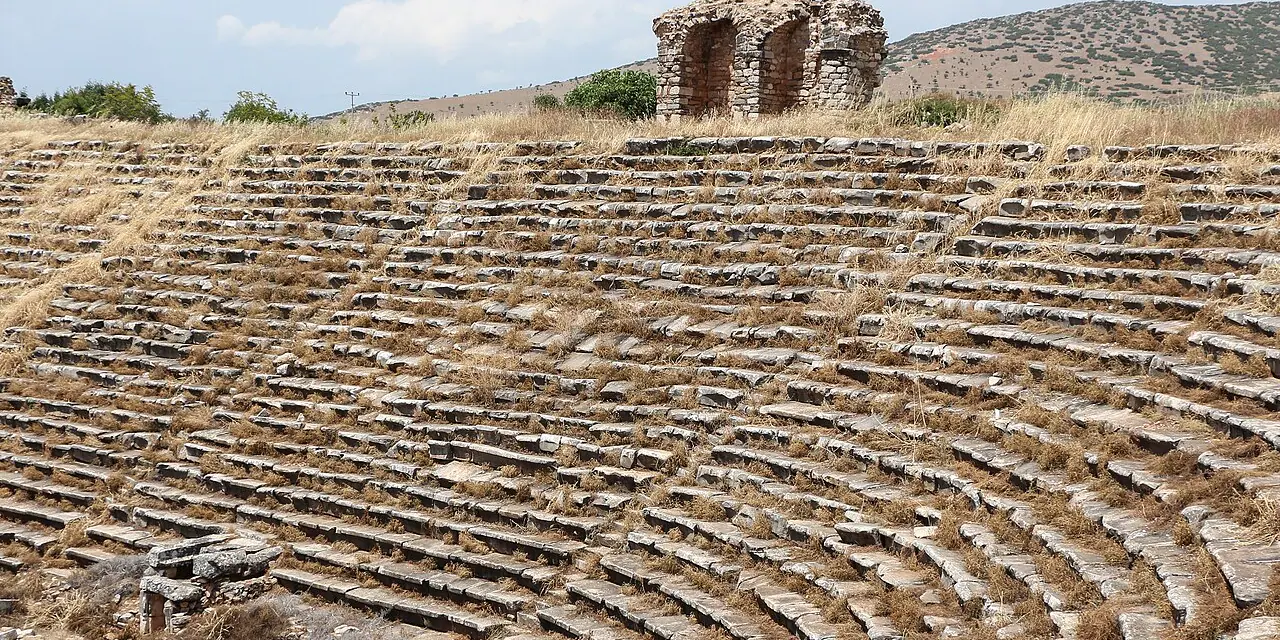
From the stadium to the sculpture collections, the city's monuments bring different kinds of skilled work together. For a closer look, continue with the workshop story. An unfinished face can tell us as much as a finished statue: skill, too, takes time to form.
Stops in this story
Sources
Frequently asked questions
How are the stops in this story connected?
The memory of marble: Aphrodisias reads Aphrodisias, Geyre, Laodikeia, Hierapolis, Miletos together not as one mandatory itinerary, but through a shared region, period, landscape or sourced historical relationship.
Where can I see this story's sources?
The Sources section visibly lists the institutional and research links supporting this narrative. Current visitor information is added only when confirmed by a dated authoritative source.