
Aphrodisias
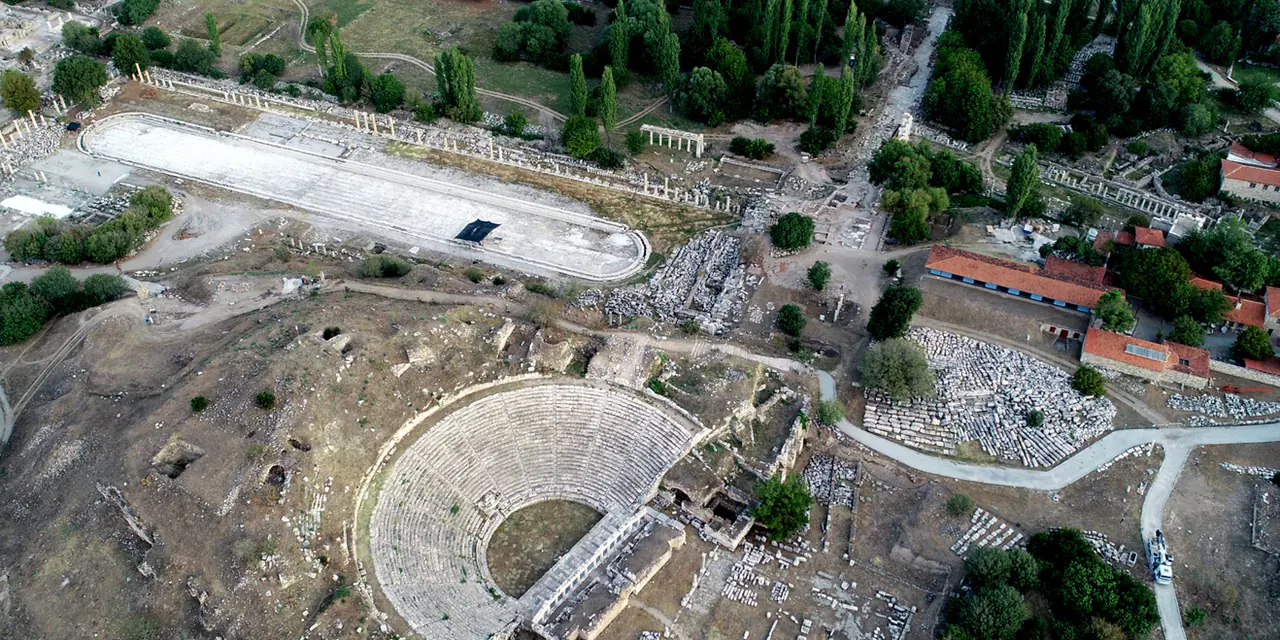
A production landscape in the Karacasu plain: marble quarry, sculpture workshop, sanctuary and stadium together.
 Photograph unavailable
Aydın · City of marble
Memory of marble: from quarry to workshop
Aphrodisias flourished as the premier sculpting centre of the Roman world, drawing on marble of exceptional quality from the city and the quarries about two to three kilometres away in the nearby foothills.
Goddess of love and emperors
The Sanctuary of Aphrodite, the Sebasteion with its magnificent imperial relief friezes, and the colossal 30,000-seat stadium reflect exceptional civic pride and artistic virtuosity.
From temple to cathedral
Around 500 CE, the Temple of Aphrodite was ingeniously converted into a grand Christian cathedral without dismantling its majestic columns, adapting classical architecture to a new sacred era.
Living museum of world heritage
A UNESCO World Heritage treasure, Aphrodisias pairs the best-preserved classical stadium in the Mediterranean with stunning sculptures in its museum, easily combined with Hierapolis and Laodicea.
City of love where marble came to life
Nestled among rolling olive groves in Aydın's Karacasu district, Aphrodisias enchants visitors with the ancient world's best-preserved 30,000-seat stadium, the dramatic Sebasteion reliefs and a world-class sculpture museum. Connecting seamlessly with Hierapolis-Pamukkale, Laodicea and Tralleis, it stands as the crowning jewel of classical stone carving.
Layers of the place
How is the place situated?
The official record places Aphrodisias on a plateau in the Dandalaz or Morsynus Valley and links the city to the marble quarries on the slopes of Babadağ to the northeast. The city and the quarries about two to three kilometres away are connected components of the same World Heritage property but should remain separate map entities.
How do the layers change?
Settlement extends back to the middle of the fifth millennium BCE. The site appeared as a small village in the 6th century BCE, gained polis status in the 2nd century BCE, developed through close relations with Rome and preserved building and inscription layers into the Byzantine period. This sequence does not make every visible structure contemporary.
How was the place inhabited?
From the 1st to the 5th centuries CE, sculptors from Aphrodisias produced signed works known across the Mediterranean world. The proximity of the quarries created a strong relationship between material and skill in buildings, reliefs and sculpture, while the official record does not assign every work to one artisan or workshop.
What can be said today?
Aphrodisias and the ancient marble quarries to its northeast were inscribed together on the World Heritage List in 2017. Current visiting, transport, opening and field conditions must be checked separately through dated official channels.
Connected stops
Stories that include this stop
Sources
Frequently asked questions
Where is Aphrodisias?
Aphrodisias is presented in this guide as a city of marble in Aydın.
How can I find sources for Aphrodisias?
The Sources section links to the evidence supporting this dossier.