
Halikarnassos
Modern Bodrum thrives directly over ancient Halicarnassus, home to the celebrated Mausoleum, Myndos Gate and sea-facing theatre.
 Photograph unavailable
Muğla · Carian harbour city
An ancient capital within modern Bodrum
Present-day Bodrum developed over ancient Halicarnassus, nestled where the Aegean merges with the turquoise Mediterranean. Blessed with twin sheltered harbours and commanding headlands, the city has anchored maritime navigation, trade and culture since deep antiquity.
Mausolus and his dream capital
In the 4th century BCE, the ambitious Carian ruler Mausolus transferred his satrapal seat from inland Milas to Halicarnassus, re-engineering the city with grid avenues, palaces and monumental walls. His colossal tomb—the Mausoleum—became celebrated as one of the Seven Wonders of the Ancient World, lending its very name to grand funerary monuments ever after.
Herodotus, the father of history, and the theatre
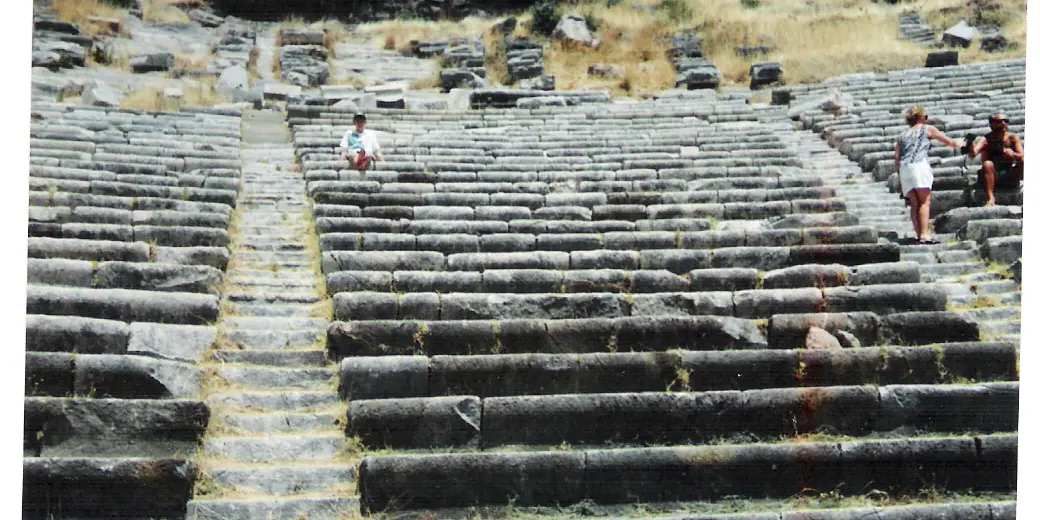
Herodotus, celebrated as the 'Father of History', was born in this vibrant port, proudly identifying himself in the opening words of his *Histories*. Overlooking the sparkling bay and medieval castle, the 13,000-seat Hellenistic hillside theatre still hosts world-class musical performances.
Myndos Gate and underwater treasures
The massive twin-towered Myndos Gate, which famously resisted Alexander the Great's siege, and Bodrum Castle—built by the Knights of St John using marble spolia from the Mausoleum—punctuate the urban fabric. It is the dazzling gateway toward Knidos and Labraunda.
Legendary harbour queen of Caria
With the foundations of the ancient Wonder of the World, the sweeping sea-view theatre, Myndos Gate and Bodrum Castle, Halicarnassus reigns as Caria's most magnificent maritime capital.
Layers of the place
How is the place situated?
Present-day Bodrum developed over ancient Halicarnassus, so the city cannot be read as one enclosed archaeological site. The theatre, city walls, Myndos Gate, Maussolleion and necropolis areas survive at different points in the living town, while the harbour-friendly coast connects them within one urban geography.
How do the layers change?
The transfer of the Carian administrative centre from Mylasa to Halicarnassus under Mausolus marks a major change in the city's political weight. Theatre, fortification, funerary and Roman remains listed by the official record belong to a long settlement sequence that cannot be reduced to one moment or ruler.
How was the place inhabited?
Its position suited to seafaring and trade invites Halicarnassus to be read through coastal movement. Herodotus also identifies himself as Halicarnassian in the opening of his work, carrying the city's name as an expressed ancient affiliation; the text does not establish an exact birth year or building.
What can be said today?
Reading Halicarnassus today means connecting remains separated across Bodrum's contemporary fabric. This dossier records their presence from official sources; current opening hours, tickets, access and conservation conditions should be checked through the relevant official channels before a visit.
Connected stops
Stories that include this stop
Sources
Frequently asked questions
Where is Halikarnassos?
Halikarnassos is presented in this guide as a carian harbour city in Muğla.
How can I find sources for Halikarnassos?
The Sources section links to the evidence supporting this dossier.