
Labraunda
High in the pine-scented peaks above Milas, Labraunda was Zeus Labraundos's sanctuary, framed by monumental androns and sacred roads.
 Photograph unavailable
Muğla · Sanctuary of Zeus
A mountain stop on the Sacred Way
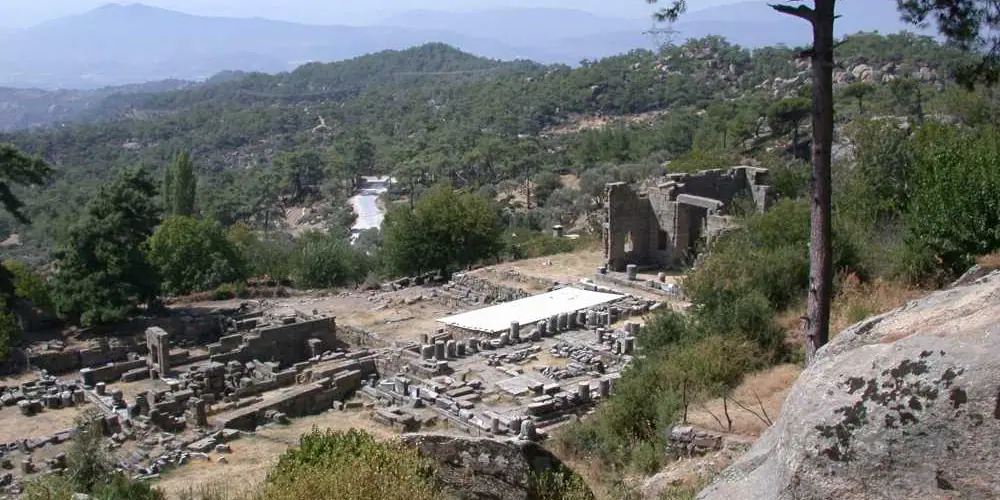
Labraunda crowns granite terraces high in the mountain landscape around Kargıcak, fourteen kilometres northeast of Milas. The sanctuary gathered around a split rock formation and a cold, perennial mountain spring, honoring Zeus Labraundos, the wielder of the double axe (labrys).
Hekatomnid terraces and the Sacred Way
In the 4th century BCE, Carian rulers Mausolus and Idrieus transformed Labraunda into a magnificent dynastic sanctuary. They built an eight-metre-wide stone-paved Sacred Way winding up from Mylasa to carry pilgrims, heavy sacrificial animals and monumental marble blocks to the terraces.
Androns and the five-day feast
Labraunda's most extraordinary survivals are Andron A and Andron B, palatial banquet halls with monumental Ionic-Doric façades built for ritual dining. During the annual five-day festival, thousands ascended the mountain for sacred banquets, libations and athletic games in the stadium.
Towering planes and mountain stillness
With crystal spring water flowing through ancient marble basins under venerable plane trees, Labraunda retains a serene spiritual aura. It forms the majestic mountain zenith of any journey linking Milas, Euromos, Stratonikeia and Lagina.
Caria's sacred mountain crown
With its Temple of Zeus perched against sacred cliffs, monumental banquet androns, stone-paved Sacred Way and cold mountain springs, Labraunda is Caria's most awe-inspiring mountain sanctuary.
Layers of the place
How is the place situated?
The official source locates Labraunda in the mountain landscape around Kargıcak. Buildings occupy terraces among granite outcrops, while a stone-paved Sacred Way about eight metres wide once connected the sanctuary with Mylasa. The ancient road's existence does not mean that the whole route is walkable today.
How do the layers change?
Early Bronze Age finds mark early human activity at the site. The source distinguishes a 6th-century BCE temple phase, an intensive 4th-century BCE building programme under Mausolus and Idrieus, and more limited later additions. The remains do not belong to one ruler or one construction phase.
How was the place inhabited?
Permanent users included priests, temple servants, workers and people cultivating sanctuary land. Periodic festivals may have brought wider communities together, but the source does not provide attendance figures, identify every group or establish an unchanging year-round population.
What can be said today?
Labraunda should be read today through its mountain landscape, terraces and architectural remains together. Museums displaying finds and the sanctuary itself are separate destinations; current roads, hours, tickets, weather and field conditions require dated official confirmation.
Connected stops
Stories that include this stop
Sources
Frequently asked questions
Where is Labraunda?
Labraunda is presented in this guide as a sanctuary of zeus in Muğla.
How can I find sources for Labraunda?
The Sources section links to the evidence supporting this dossier.