
Lagina
At Turgut: a Carian threshold joining the sanctuary of Hekate to Stratonikeia.
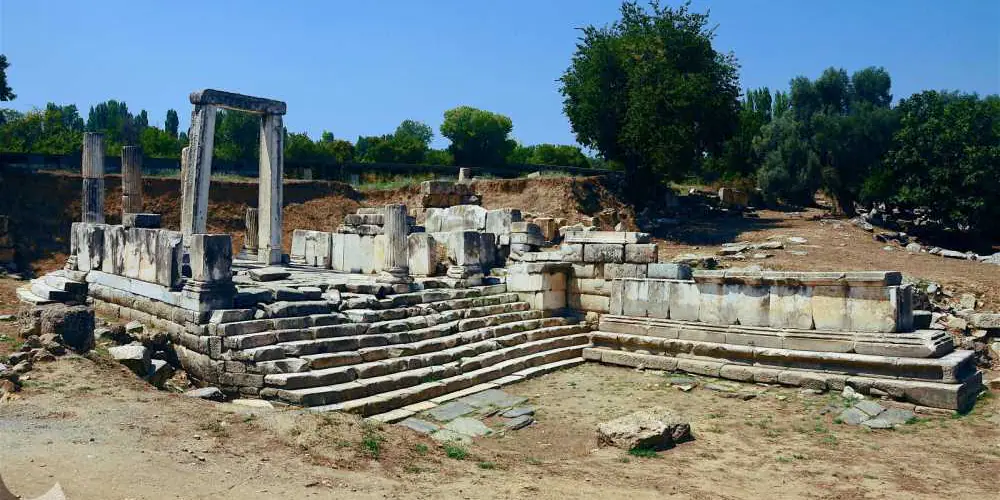 Photograph unavailable
Muğla · Sanctuary of Hekate
From the Bronze Age to the sanctuary
Settlement around Lagina reaches back to the third millennium BCE, blossoming into antiquity's foremost sanctuary dedicated to Hecate, goddess of the moon, crossroads and the underworld.
The sacred link to Stratonikeia
Inscriptions at Lagina and Stratonikeia record a Sacred Way joining the two centres; Seleucid building activity made Lagina prominent as a religious centre and Stratonikeia as a political centre.
Plunder in 40 BCE
Roman general Labienus plundered the sanctuary of Hekate at Lagina in 40 BCE after failing to capture Stratonikeia, a testament to how sacred shrines stood at the crossroads of regional warfare.
Legacy of Osman Hamdi Bey
Excavated by renowned painter and archaeologist Osman Hamdi Bey in 1891, Lagina's marble friezes and quiet olive groves form a serene complement to Stratonikeia and Knidos.
Hecate's mystery among the olive groves
Nestled among centuries-old olive trees in Turgut near Yatağan, the Sanctuary of Hecate at Lagina was dedicated to the mysterious goddess of magic and crossroads. Connected via the ancient Sacred Way to Stratonikeia, and pairing naturally with Milas and Knidos, it is one of Caria's most evocative sacred landscapes.
Layers of the place
How is the place situated?
The official source distinguishes Lagina as a religious centre and Stratonikeia as a political centre. An ancient Sacred Way linked them, but this historical relationship does not make Lagina one structure inside Stratonikeia. The propylon, altar, enclosure, stoas and temple also require separate map nodes.
How do the layers change?
Settlement traces in the surroundings reach the 3rd millennium BCE, while the monumental sanctuary developed in later phases. A basilical church after Hellenistic and Roman construction and repair layers marks a different religious and functional period rather than uninterrupted use for the same purpose.
How was the place inhabited?
The Sacred Way, ceremonial entrance, altar and stoas form a spatial sequence for movement, gathering and ritual. The source, however, does not reconstruct every ceremony step by step, identify all participant groups or settle the meaning of every frieze.
What can be said today?
Work at Lagina by Osman Hamdi Bey and Halit Ethem Bey is significant among the earliest archaeological excavations led by Turkish scholars. Excavation history, the present display locations of finds and a visit to the site are separate information layers; current hours, tickets, roads and field conditions require fresh official confirmation.
Connected stops
Stories that include this stop
Sources
Frequently asked questions
Where is Lagina?
Lagina is presented in this guide as a sanctuary of hekate in Muğla.
How can I find sources for Lagina?
The Sources section links to the evidence supporting this dossier.