
Troya
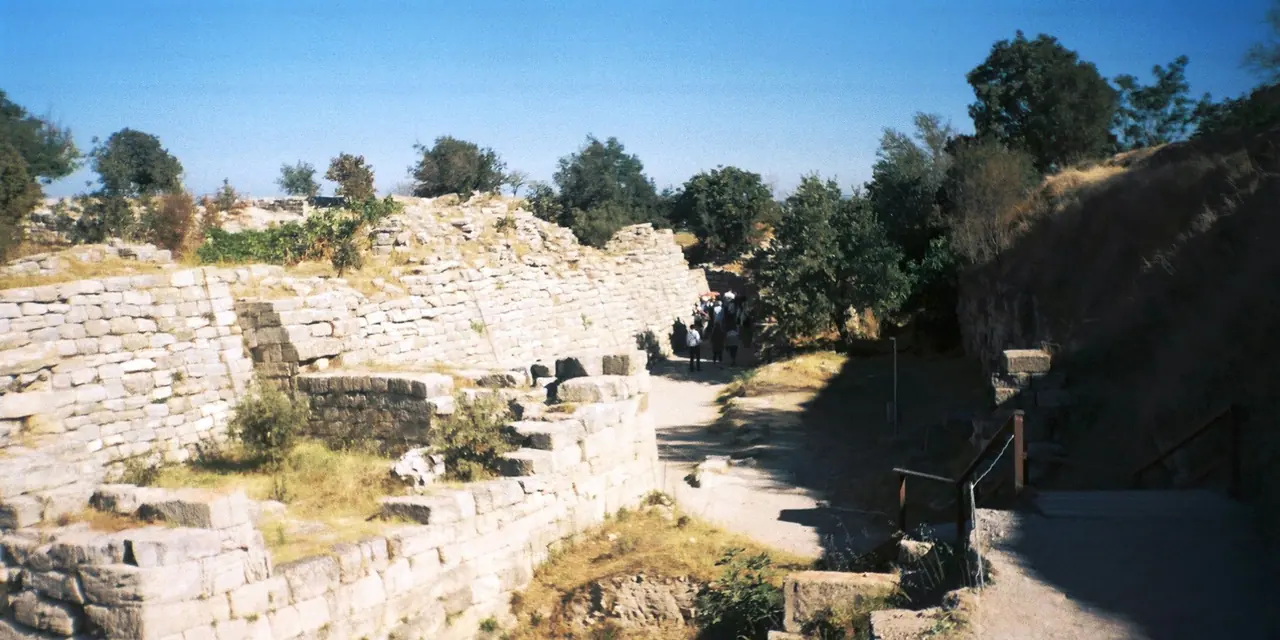
A four-thousand-year settlement sequence on Hisarlık, looking toward the straits.
 Photograph unavailable
Çanakkale · Archaeological landscape
One hill, many cities
Troy is not one city: successive settlements at Hisarlık preserve the long contact of the Troas, framed by Assos and Alexandria Troas, with the Aegean, Balkans and Anatolia.
Inside the walls, beyond the plain
Citadel, gates, ramps and lower town breathe together. The plain opening to harbours, fields and the straits was not merely a setting but a landscape of movement, exchange and life.
Keeping myth and archaeology distinct
While the Iliad etched Troy into world memory, the archaeological site reveals a multi-layered human journey stretching from Bronze Age ramparts to Roman monuments.
A protected landscape
Troy is not merely a mound; it is a living cultural landscape defined by coastal winds, panoramic strait views and the award-winning Troy Museum.
Four millennia at the gate of the Straits
Standing at Troy and gazing toward the Dardanelles, you feel at the heart of the Troas region connecting with Assos and Alexandria Troas. The tiered heights of Hisarlık evoke both the epic landscape of Homer and the strategic hub of ancient maritime trade.
Layers of the place
How is the place situated?
Troy lies at Hisarlık within the boundaries of Tevfikiye village, about 25 kilometres from central Çanakkale. Settlement layers accumulated on the same hill show not one city plan but the repeated use of the same geographic threshold in different periods.
How do the layers change?
The official record says excavations identified nine cultural layers and that the earliest reach into the third millennium BCE. These layers are not copies of one another; they form an archaeological sequence in which construction, settlement scale and use changed over a long period.
How was the place inhabited?
Repeated settlement on the same hill shows different communities reassessing Hisarlık's position for their own needs. Archaeological layers support questions about everyday life, but matching people or events in the Homeric narrative one-to-one with a particular layer exceeds the source's evidence.
What can be said today?
Troy has been on the UNESCO World Heritage List since 1998. The status forms part of the site's current conservation and interpretation framework; dated museum or institutional notices should be checked separately for hours, tickets and access conditions.
Connected stops
Stories that include this stop
Sources
Frequently asked questions
Where is Troya?
Troya is presented in this guide as a archaeological landscape in Çanakkale.
How can I find sources for Troya?
The Sources section links to the evidence supporting this dossier.