
Sardes
At Sardis, refining workshops and the tumuli of Bin Tepe trace two distinct scales of Lydia's capital.
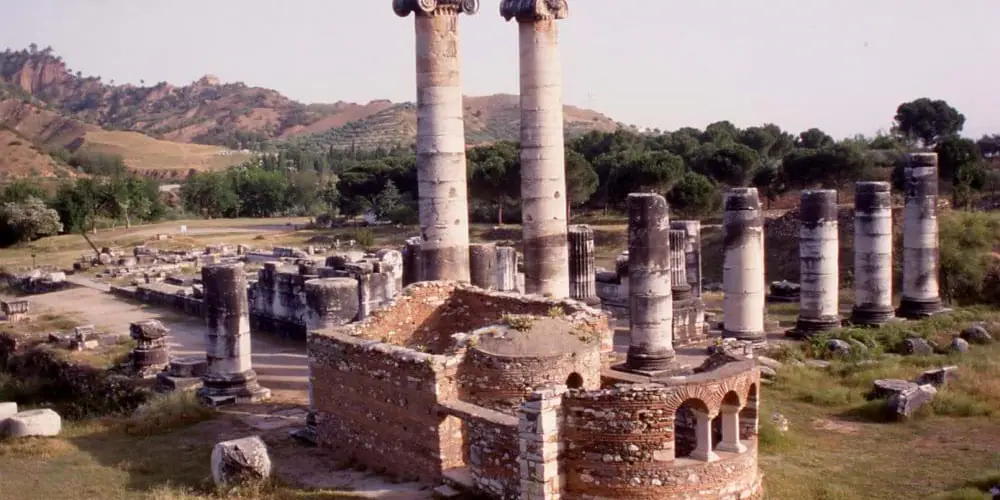 Photograph unavailable
Manisa · Lydian capital
Separating gold and silver
Outside Sardis's walls, simple installations near a stream separated gold from silver in the first half of the sixth century BCE. Cementation separated the alloy; cupellation helped refine the metal. These workshops bring the labor behind metalworking into the city's story.
A separate turn in coinage
Around Croesus's reign, separate coins of pure gold and pure silver appeared. They mark a change in the coinage system, distinct from the workshop techniques; evidence for refining does not identify the metal's source.
An open question about provenance
Samples of natural gold from the Pactolus and nearby streams examined in 2011 were almost pure, while electrum coins contained both gold and silver. The refining essay's final questions likewise leave the coins' metal provenance open. The streams therefore cannot be treated as the established source of the coin metal.
From the capital to the northern plain
North of Sardis, Bin Tepe is a cemetery landscape on a different scale from urban life. Read the relationship from another angle in the Lydian story of gold and Croesus.
From workshop to plain
Small refining vessels and the tumuli across the plain preserve different scales of activity. One shows metal being separated; the other marks a funerary landscape beyond the city.
Layers of the place
How is the place situated?
Sardis's walls and terraces mark its urban form, with settlement, sanctuary and cemetery areas distinct. Bin Tepe's tumuli lie about 7–17 kilometres north of the acropolis.
How do the layers change?
Sardis was the capital of the Iron Age Lydian kingdom. The UNESCO entry also describes later Persian, Greek, Roman and Byzantine layers in the wider property.
How was the place inhabited?
Bin Tepe's tumuli form a burial landscape at another scale from the city. Read with Sardis, the cemetery broadens the picture of the Lydian capital without turning every mound into a royal biography.
What can be said today?
In 2025, UNESCO inscribed Sardis and the Lydian Tumuli of Bin Tepe as two components of one World Heritage property. The entry also notes the visual relationship between them.
Connected stops
Stories that include this stop
Sources
Frequently asked questions
Where is Sardes?
Sardes is presented in this guide as a lydian capital in Manisa.
How can I find sources for Sardes?
The Sources section links to the evidence supporting this dossier.