
Kula Volkanları
Manisa's Katakekaumene (Burned Country): a dramatic volcanic wilderness of basalt lava flows, cinder cones and fairy chimneys.
 Photograph unavailable
Manisa · Volcanic cultural landscape
The making of the Burned Country
Named Katakekaumene (the Burned Country) by the geographer Strabo, Kula is Turkey's youngest volcanic landscape. Three successive eruptive cycles ending as recently as 12,000 years ago carpeted the Gediz Graben with jet-black basalt lava seas and roughly 80 volcanic cinder cones.
Prehistoric footprints preserved in stone
Among Kula's most extraordinary prehistoric treasures are 12,000-year-old human footprints discovered pressed into volcanic ash near Çakallar cone. Made by hunter-gatherers witnessing active eruptions, they freeze a dramatic moment of early humanity fleeing a fiery world.
Fairy chimneys and crater trails
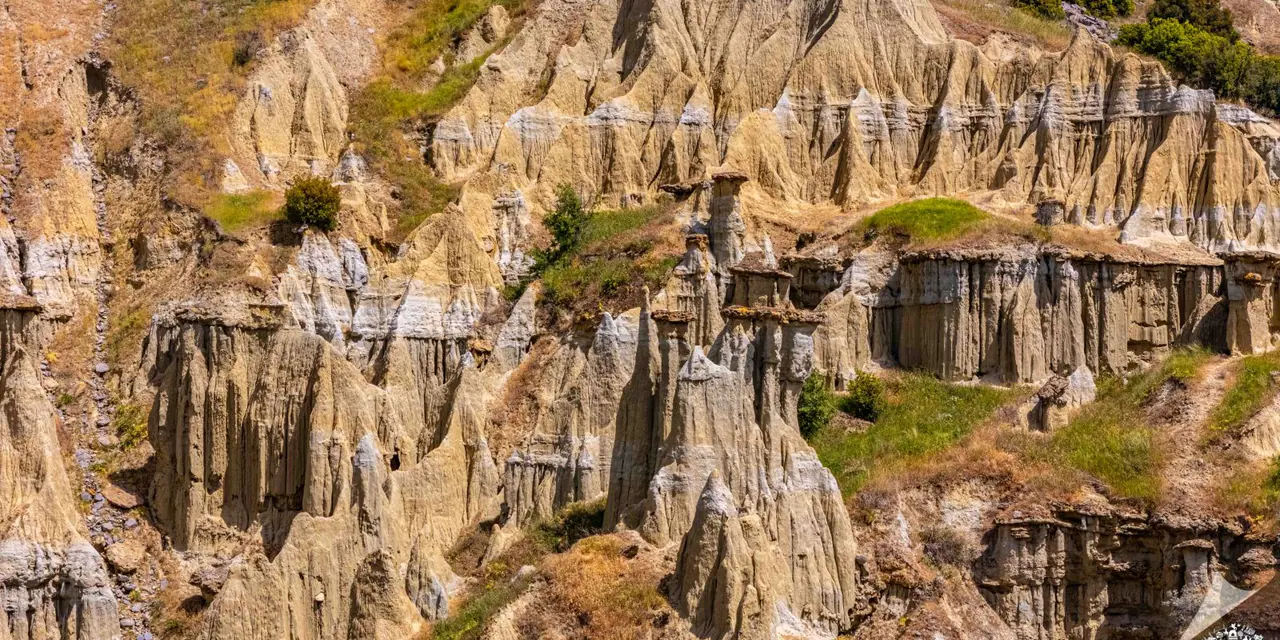
Carved into soft volcanic tuff by the Gediz River and torrential rains, the 'Kuladocia' fairy chimneys evoke a surreal miniature Cappadocia. Wooden boardwalks encircling the Divlit Tepe cinder cone allow visitors to traverse rugged black clinker and lava flows safely.
UNESCO Global Geopark and timber mansions
Enshrined within the Kula-Salihli UNESCO Global Geopark, this landscape blends volcanic terroir vineyards with Ottoman timber mansions and fertile valleys leading down toward Sardis.
Aegean miracle born of subterranean fires
With its Divlit cinder cone, 12,000-year-old prehistoric footprints, basalt lava plains and Kuladocia fairy chimneys, Kula is Turkey's youngest volcanic wonder between Kula Geopark and Sardis.
Connected stops
Sources
Frequently asked questions
Where is Kula Volkanları?
Kula Volkanları is presented in this guide as a volcanic cultural landscape in Manisa.
How can I find sources for Kula Volkanları?
The Sources section links to the evidence supporting this dossier.