
Metropolis
Commanding the Torbalı Plain, Metropolis is the City of the Mother Goddess, rich in Hellenistic stoas, marble theatre and Roman mosaics.
 Photograph unavailable
İzmir · Hillside city
A hill looking over the Torbalı Plain
Metropolis crowns a prominent limestone hill between Yeniköy and Özbey on the western flank of the Torbalı Plain. This panoramic vantage commanded the fertile vineyards of the Cayster (Küçük Menderes) basin and controlled crucial overland trade corridors between Smyrna and Ephesus.
Sanctuary of the Mother Goddess
Meaning literally 'City of the Mother Goddess', Metropolis held sacred rock shelters at Uyuzdere where terracotta figurines honor the Anatolian goddess Cybele (Meter Gallesia). Hellenistic generals under Lysimachus refortified the crest with monumental ashlar walls and a Temple of Ares.
Marble theatre and proedria seats
Carved gracefully into bedrock, the white marble theatre features masterfully sculpted lion-paw proedria (honorary VIP thrones). Adjacent, the well-preserved Bouleuterion, colonnaded stoas and sprawling Roman villas adorned with mythological mosaics showcase aristocratic affluence.
An urban terrace above olive groves
Ascending through tiered terraces from bath complexes and wrestling palaestra to the Byzantine acropolis, Metropolis rewards travelers with stunning views. It forms an unforgettable detour along the ancient royal highway between Klaros and Ephesus.
Inland Ionia's marble terrace
With its eagle-nest acropolis over the Torbalı Plain, ornate marble theatre with VIP thrones and mosaic-paved Roman estates, Metropolis is the luminous crown of inland Ionia between Ephesus and Klaros.
Layers of the place
How is the place situated?
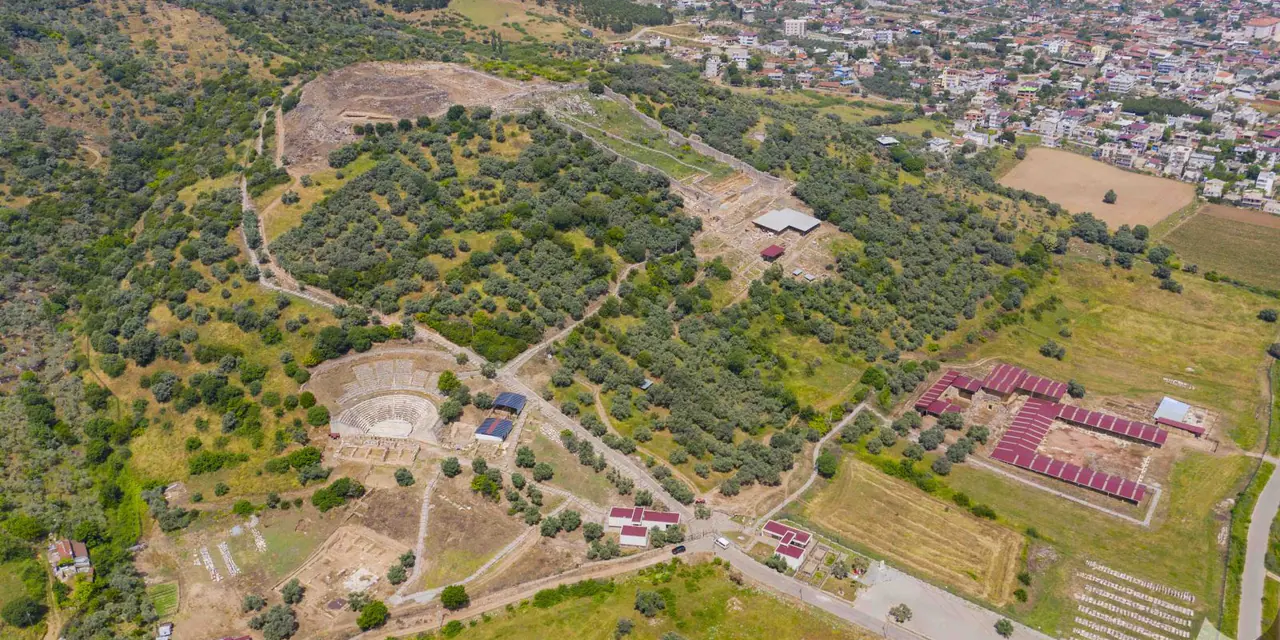
The city occupies a hill between Yeniköy and Özbey, facing the plain. The theatre, stoa, acropolis and Roman structures lower on the slope sit at different levels; the aerial image makes this topographic relationship visible.
How do the layers change?
Walls, a stoa and a theatre stand out among the Hellenistic public works. In the Roman period the city expanded down the slopes, while in the Byzantine period the settlement contracted and its defensive line enclosed a smaller area.
How was the place inhabited?
The theatre set into the natural slope hosted social, cultural and artistic gatherings. Reading it together with the other public structures and the changing scale of the city offers a safer community frame than labelling the entire site a single “monument to democracy.”
What can be said today?
The theatre, protective roofs, excavation areas, olive groves and the modern fabric of Yeniköy enter the same field of view. The current visitor route, closed structures and working hours must be checked through dated institutional notices.
Connected stops
Stories that include this stop
Sources
Frequently asked questions
Where is Metropolis?
Metropolis is presented in this guide as a hillside city in İzmir.
How can I find sources for Metropolis?
The Sources section links to the evidence supporting this dossier.