
Klaros
Set around a sacred spring in the Ahmetbeyli valley, Klaros was Apollo's renowned pan-Hellenic oracle centre.
 Photograph unavailable
İzmir · Sanctuary of Apollo
A sacred spring and temple on the plain
Klaros nestles in the lush Ahmetbeyli valley beside cold flowing springs and ancient sacred groves. While classical temples usually crowned acropolises, Klaros was established on the valley floor because sacred spring waters formed the very medium of divine prophecy.
Nocturnal rites and Apollo's seer
Klaros was never a secular city; it operated as a sanctuary composed of distinct architectural and ritual areas tied to Kolophon. Seekers arrived from across the Mediterranean; drinking from the subterranean spring in the dark adytum, Apollo's prophet delivered rhythmic oracles that guided kings—including Alexander the Great's dream to rebuild Smyrna.
Monumental statues and delegate inscriptions
Along the sacred processional way linking the propylon to the temple altar, honorific inscriptions record embassies sent from cities across the Roman Empire. Inside the temple cella, fragments of colossal 7.5-metre seated marble statues of Apollo, Artemis and Leto inspire awe.
Reflections in the oracle's waters
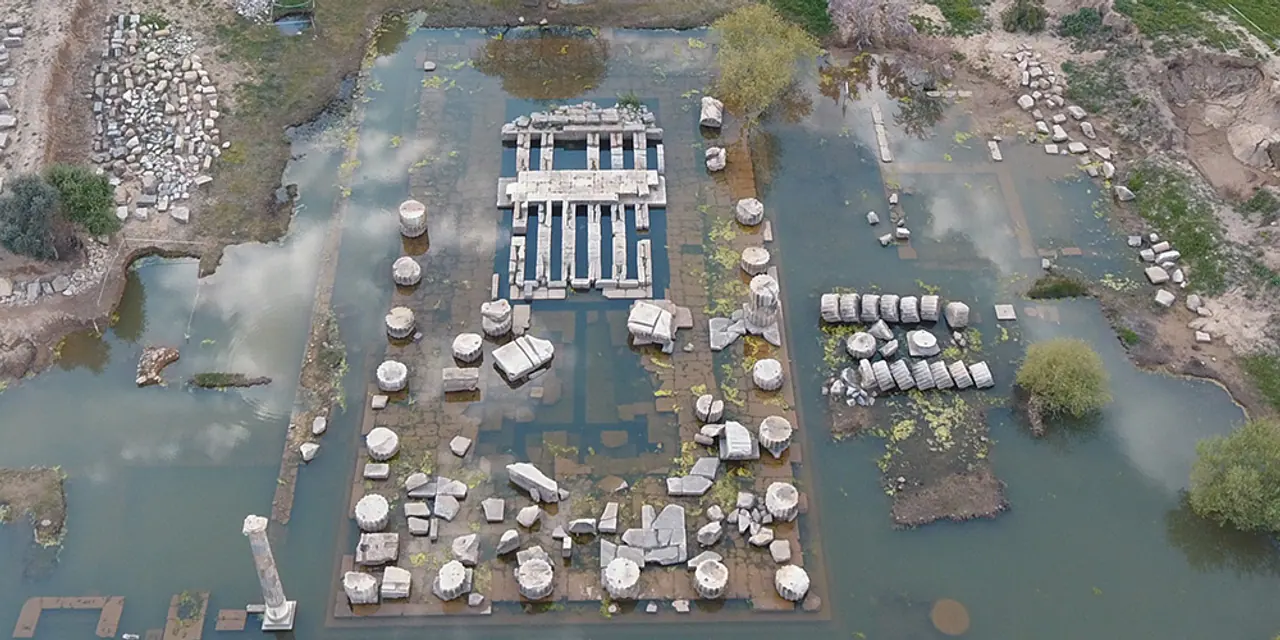
High groundwater gently submerses the temple floor today, creating tranquil reflecting pools around fallen fluted drums and archaic altars. It offers an enchanting, mystical interlude for travellers journeying between Metropolis and Ephesus.
The spiritual heart of Ionia
With its Doric Temple of Apollo bathed in crystal spring waters, colossal seated deities and marble decrees of ancient city embassies, Klaros is Ionia's most mystical sanctuary between Smyrna and Metropolis.
Layers of the place
How is the place situated?
Klaros should be read as a sanctuary composed of distinct architectural and ritual areas, not as an ordinary urban centre. The Temple of Apollo, the altar to its east and the tethering blocks found at the site belong to different parts of this sacred arrangement.
How do the layers change?
The official record traces the divinatory function from the late 13th century BCE to abandonment in the 4th century CE. Construction of the Temple of Apollo began in the early 3rd century BCE, while parts of the temple and the monumental cult statues were completed in later phases.
How was the place inhabited?
The animal tethering blocks used for a hecatomb are archaeological evidence of collective sacrifice. They suggest the organisation of attendants, dedicating communities and visitors at the sanctuary, but do not permit a complete reconstruction of undocumented ritual details.
What can be said today?
The temple plan is read today among column drums, stone blocks and seasonal standing water. Because the hours and open-or-closed status on the official page can change, they should be checked again on the day of a visit.
Connected stops
Stories that include this stop
Sources
Frequently asked questions
Where is Klaros?
Klaros is presented in this guide as a sanctuary of apollo in İzmir.
How can I find sources for Klaros?
The Sources section links to the evidence supporting this dossier.