
Erythrai
Ionia's Red City at Ildırı, shaped by red soil and millstones.
 Photograph unavailable
İzmir · The Red City
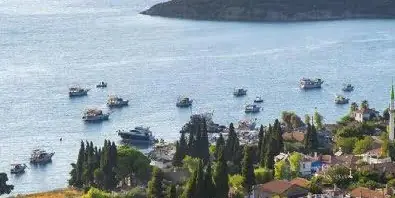
Clear bays of the Red City
Erythrai was built across rising terrain between the coast and the acropolis at modern Ildırı on the Karaburun Peninsula, named for its distinctive red soil and sheltered island-studded bay.
Ionian League and millstones
A proud member of the Panionian League, Erythrai prospered through seafaring and quarrying prized millstones, while the acropolis temple of Athena Polias safeguarded the community.
Ancient theatre and the island horizon
Carved into the acropolis slope, the ancient theatre commands breathtaking vistas across the Aegean and offshore islets, defended by five kilometres of monumental Hellenistic fortifications.
Tranquil rhythm of Ildırı village
Standing amid artichoke fields and gentle fishing craft, ancient ruins welcome travellers following the Ionian coastal circuit to Teos, Klazomenai and Smyrna.
Ionia's Red City on the Çeşme Peninsula
Resting above the idyllic seaside village of Ildırı in Çeşme, Erythrai pairs an ancient amphitheatre looking out across Aegean islands with the sanctuary of Athena and Hellenistic battlements. Linking with Teos and Klazomenai, it represents the serene coastal poetry of ancient Ionia.
Layers of the place
How is the place situated?
The city occupies the rising terrain between the coast and the acropolis on the Karaburun Peninsula. The theatre lies on the northern slope of the acropolis, while the sanctuary of Athena forms a separate focus on the highest terrace; the theatre shown in the image is not the whole city.
How do the layers change?
The official record reports settlement in the area from the Early Bronze Age and follows the Ionian city of Erythrai through changing Lydian, Persian, Hellenistic and Roman political settings. The theatre and sanctuary likewise preserve traces of different phases rather than one construction moment.
How was the place inhabited?
Erythrai was among the cities participating in the Panionion. The source also notes a period in which the city produced and exported millstones; this illuminates a coastal network of production and movement without reducing the entire economy to one commodity.
What can be said today?
The coast of Ildırı, the theatre slope and the acropolis can be read together today. Because the official page does not provide a current excavation route, tickets, hours or field conditions, visiting information must be checked separately through dated institutional notices.
Connected stops
Stories that include this stop
Sources
Frequently asked questions
Where is Erythrai?
Erythrai is presented in this guide as a the red city in İzmir.
How can I find sources for Erythrai?
The Sources section links to the evidence supporting this dossier.