
 Photograph unavailable
Pergamon and Aizanoi: a Hellenistic Inner Aegean threshold
Story in brief
Place, time and memory on one line.
A sourced dossier reading Aizanoi's changing Hellenistic connection with Pergamon and Bithynia without turning the two cities into a current route or one single polity.
Connecting the dizzying acropolis of Pergamon to the volcanic steppe of Phrygia, this narrative follows the dialogue between Hellenistic royal prestige and Inner Anatolian sanctuaries. Soaring above the Bakırçay plain, Pergamon was the royal capital of the Attalid kings, celebrated for its vertiginous theater, Great Altar and 200,000-scroll library on parchment.
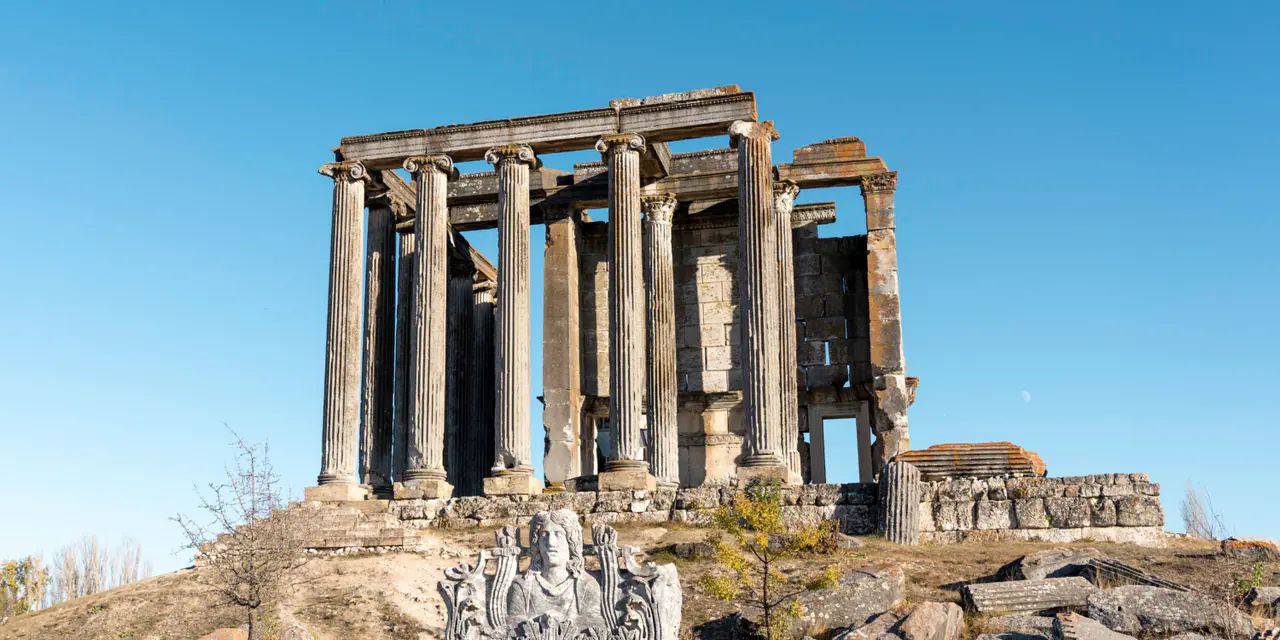
Journeying inland across mountain plateaus brings you to Aizanoi beside the Penkalas stream in Kütahya. Successively contested by Pergamon and Bithynia before Roman rule, Aizanoi flourished into an architectural wonder, home to the best-preserved Temple of Zeus in Asia and the world's earliest commercial exchange building. This trajectory connects coastal Hellenistic genius with the timeless monumentality of the Inner Aegean.
Stops in this story
Sources
Frequently asked questions
How are the stops in this story connected?
Pergamon and Aizanoi: a Hellenistic Inner Aegean threshold reads Bergama, Aizanoi together not as one mandatory itinerary, but through a shared region, period, landscape or sourced historical relationship.
Where can I see this story's sources?
The Sources section visibly lists the institutional and research links supporting this narrative. Current visitor information is added only when confirmed by a dated authoritative source.