
 Photograph unavailable
Sardis: from temple to city life
Reading the place
Not one monument, but a layered setting.
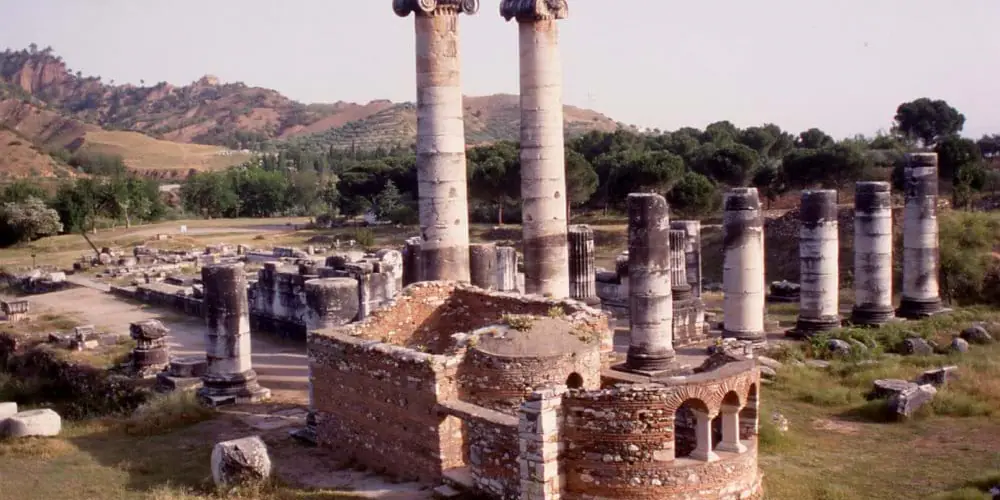
Near Salihli, Sardis grew between the Gediz plain and the Bozdağ mountains, along a route from the Aegean coast into inland Anatolia. In this former Lydian capital of the Inner Aegean, temple columns, baths and shop remains belong to different periods. Standing before one building does not bring the city's entire past into view.
Manisa · salihli
Place
The Temple of Artemis began to rise in the Hellenistic period on the site of an older sanctuary. The Bath–Gymnasium complex opens onto Roman civic life, while the nearby synagogue reveals another community in the late Roman city. Looking for these buildings together on the Culture Map helps us grasp Sardis as a settlement extending beyond a single monument.
Time
Capital of Lydia in the seventh and sixth centuries BCE, Sardis remained a regional centre under Persian rule. The Hellenistic and Roman periods brought new buildings. Many of the large civic structures visible today took shape centuries after the capital remembered through Croesus and his gold.
Community
The baths, synagogue and excavated late Roman shops recall bathing, worship and trade as different needs within the same city. Sardis holds more than the memory of royal wealth. Its walls and pavements also preserve traces of the communities who used them in everyday life.
Today
The Bin Tepe burial mounds around Sardis open another scale for understanding the Lydian landscape alongside the city's buildings. The connection from urban columns to tomb hills across the plain brings places of daily life into view beside places of remembrance.
Narratives that include this place
Periods
- Ionia & Aeolis
- Roman era
- The Aegean today