
 Photograph unavailable
The Name of Croesus: Gold at Sardis and Bin Tepe
Dossier in brief
Place, time and memory in one narrative.
Croesus' wealth leads from metalworking at Sardis to Herodotus' questions and the burial landscape of Bin Tepe. One name brings the material traces of coin production close to a text about a king's fortune.
Long-form story · Culture and memory · A link to today · deniz-doga
Narrative
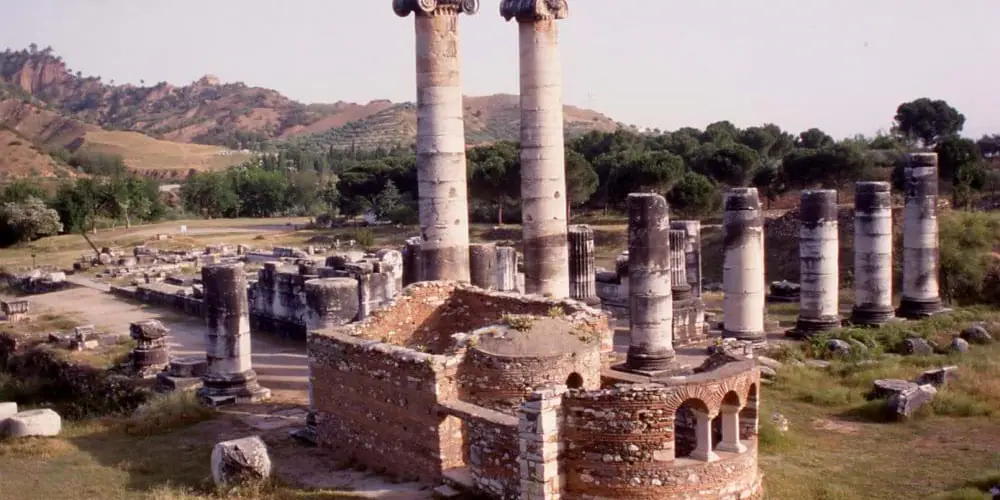
At Sardis, gold means more than a king's fortune. Small furnaces, pottery fragments and metal foils beside the Pactolus reveal the work of people separating gold from silver. In these workshops of the early sixth century BCE, processing changed the metal's value. Where the alloy came from remains debated; the stream and every coin cannot simply be joined into one unbroken chain.
Sequence
Under Croesus, gold and silver circulated as separate coinages. When Sardis came under Persian rule, the lion-and-bull design continued to be minted: the money outlasted the king's power. In Herodotus' Histories, Solon refuses to equate the wealth Croesus displays with a happy life. Their encounter belongs to the ancient author's narrative; it is a different kind of evidence from the excavated furnaces.
Stops
North of Sardis, Bin Tepe opens another view of the city through more than 119 burial mounds. The scale shifts from small tools used to process metal to a landscape shaped by Lydian monuments. The visual connection between city and cemetery carries a memory broader than the name of a single ruler.
Present-day link
Sardis and Bin Tepe entered the UNESCO World Heritage List together in 2025. Their shared recognition invites us to read the ancient city alongside the surrounding plain. Looking north from the two parts of Sardis, Croesus' name becomes a starting point for asking how wealth was made, and how it is remembered.
Periods
- Ionia & Aeolis
- klasik-yunan
- The Aegean today
Narrative stops
Research sources
- Decision 47 COM 8B.30: Sardis and the Lydian Tumuli of Bin Tepe
- Sardes Antik Kenti ve Bin Tepeler Lidya Tümülüsleri Alan Yönetim Planı, 2024–2028
- Sardes Örenyeri
- Gold and Silver Refining at Sardis
- The Coins of Sardis
- Herodotus, Histories, Book 1
- Herodotus, Histories, Book 5
- Redating Croesus: Herodotean Chronologies, and the Dates of the Earliest Coinages
- Croesus